
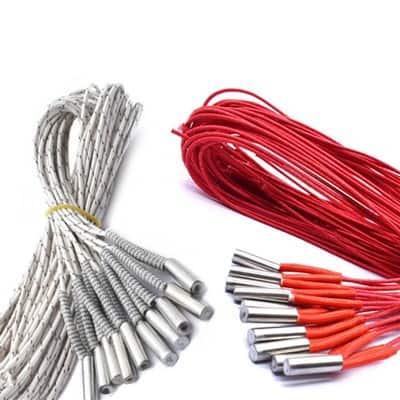
HIGH WATT DENSITY
12v Heater Resistance
12v Heater Resistance by LICHENGDA. Bore fit and conductive heat transfer, configuration details and made-to-drawing quotation for molds, dies and conductive tooling.
Product image gallery (7)
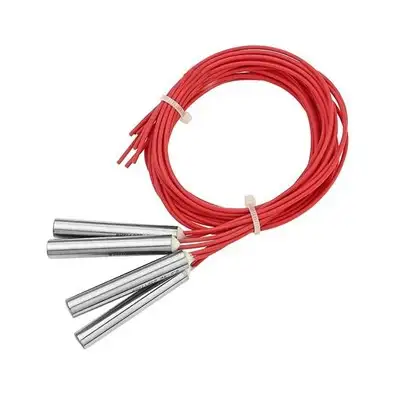
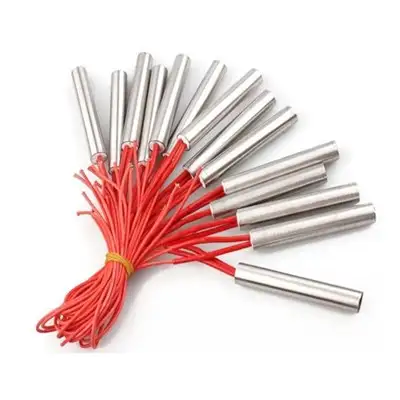
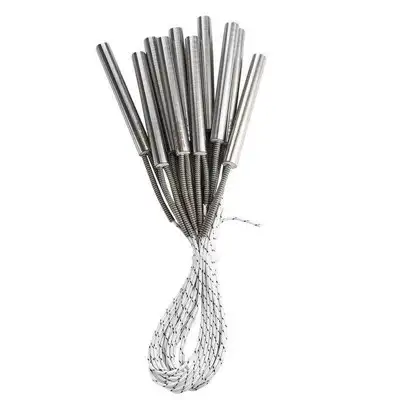
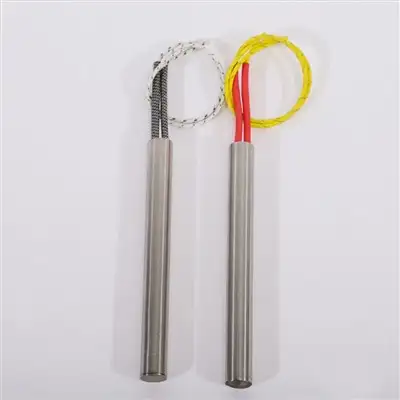
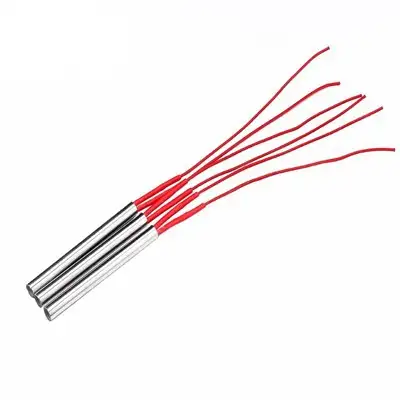
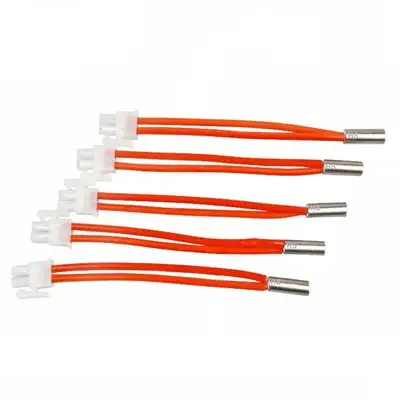
PRODUCT ENGINEERING
Bore fit and conductive heat transfer
12v Heater Resistance: Install the active sheath in a close-fitting, clean bore. Specify bore diameter, tolerance and heated length together; excessive clearance increases sheath temperature and slows heat transfer.
Record the lead exit, cold end and removal access before the tool is machined. Locate the control sensor near the heated zone without placing it directly against the resistance element.
For 12v Heater Resistance, use the listed 12v as catalog identifiers and confirm the complete electrical and dimensional combination before calculating current, selecting a supply or fixing the mounting pattern.
The archived configuration for 12v Heater Resistance lists Resistance heating wire: NiCr 80/20 wire; Length tolerance: ±1 mm; Diameter tolerance: ±0.02mm. Treat these as reference options and reconcile them with the named configuration and installation drawing before quotation.
For 12v Heater Resistance, send the supply, continuous and peak temperature, mounting drawing, lead exit and quantity. Include the heated medium and control method so the quoted configuration can be checked against the actual duty.
| Catalog name values | 12v |
|---|
Application and reference configuration
Molds, dies and conductive tooling. The final suitability of 12v Heater Resistance depends on the assembled equipment and agreed operating conditions.
Archived figures below describe reference options or a product series. Confirm the exact model specification in the quotation.
| Resistance heating wire | NiCr 80/20 wire |
|---|---|
| Wattage Tolerance | +5%, -10% |
| Resistance tolerance | +10%, -5% |
| Length tolerance | ±1 mm |
| Diameter tolerance | ±0.02mm |
| Standard Cold Zone | 5-10mm |
| Insulation resistance (cold) | ≥ 500 MΩ |
| Maximum leakage current (cold) | ≤ 0.5 mA |
| Thermocouple Location | type J / K / Ground wire |
ARCHIVED PRODUCT INFORMATION
Description
cartridge heater is an electric heating element that is typically cylindrical in shape and is used to provide localized heat in industrial and commercial applications. It is made of a resistive heating element, such as a Nichrome wire, that is embedded in a metal sheath.
When electric current is passed through the resistive heating element, it heats up and transfers heat to the metal sheath. The metal sheath then conducts the heat to the surrounding environment, providing localized heat in the area where the cartridge heater is installed.
Cartridge heaters are often used in applications such as plastic injection molding, hot stamping, and packaging equipment, where precise and consistent heating is required. They can also be used in laboratory and medical equipment, where precise temperature control is critical.
One advantage of cartridge heaters is their high heating capacity in a small size, which allows them to be easily installed in tight spaces. They are also highly customizable, with a variety of options for size, wattage, voltage, and other specifications.
Advantages
Internal wiring: high temperature resistance, uniform heating, high thermal conductivity and difficul cable fracture.
External wiring: high temperature resistance, uniform heating and high thermal conductivity.
Date sheets
|
Resistance heating wire |
NiCr 80/20 wire |
|
Wattage Tolerance |
+5%, -10% |
|
Resistance tolerance |
+10%, -5% |
|
Length tolerance |
±1 mm |
|
Diameter tolerance |
±0.02mm |
|
Standard Cold Zone |
5-10mm |
|
Insulation resistance (cold) |
≥ 500 MΩ |
|
Maximum leakage current (cold) |
≤ 0.5 mA |
|
Thermocouple Location |
type J / K / Ground wire |
Internal wiring port section of the heating tube does not adopt the terminal connection mode,Making it have high temperature resistance and strong mechanical properties.
The port part of the heating tube adopts terminal connection mode Is resistant to high temperature and works in the heating medium which can not conduct wiring at both ends.
Function:
1. Operating conditions: ambient temperature-20℃ ~ + 60℃, relative temperature <80%;
2. Electrical strength: cold withstand voltage AC work 1500V 50Hz lasts for 1 min without breakdown phenomenon;
3. Thermal insulation performance: AC 1000V 50Hz lasts for 1 min without breakdown phenomenon;
4. Leakage current <0.5MA; Insulation resistance> 30MΩ;
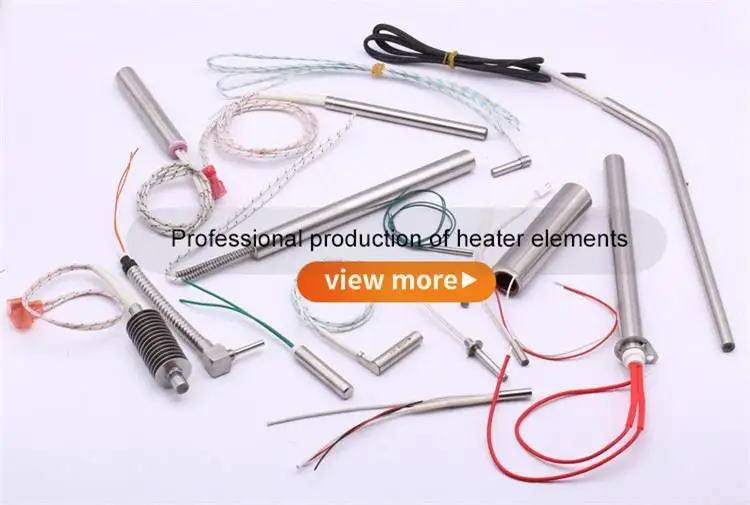
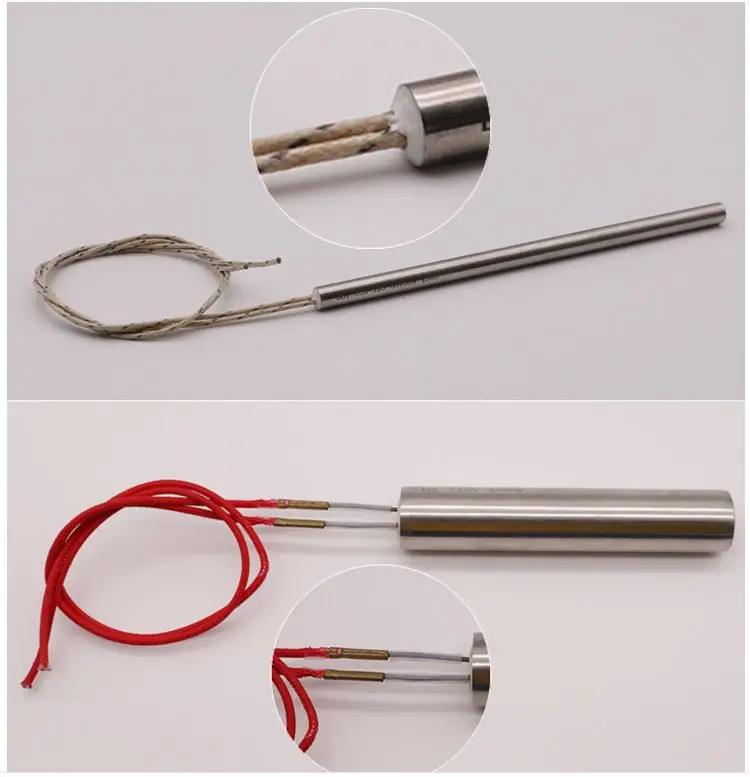
Internal wiring port section of the heating tube does not adopt the terminal connection mode,
Making it havhigh temperature resistance and strong mechanical properties.
The port part of the heating tube adopts terminal connection mode Is resistant to
high temperature and works in the heating medium which can not conduct wiring at both ends.
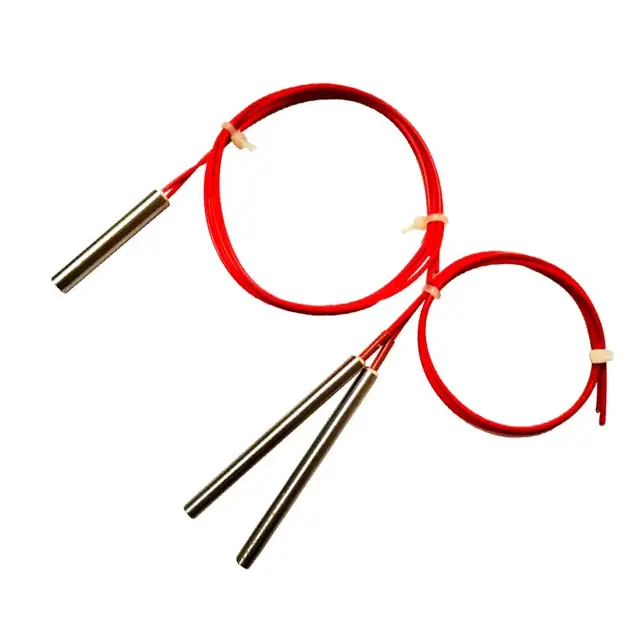
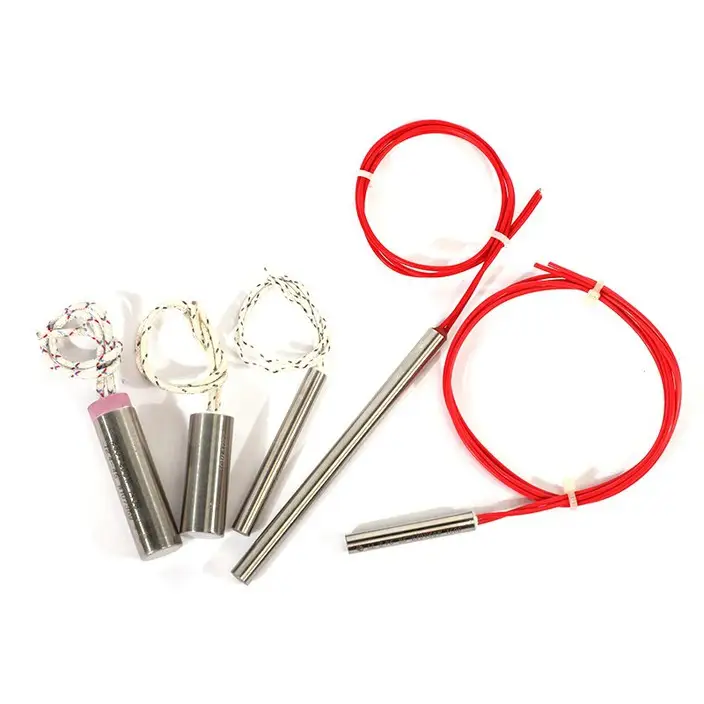
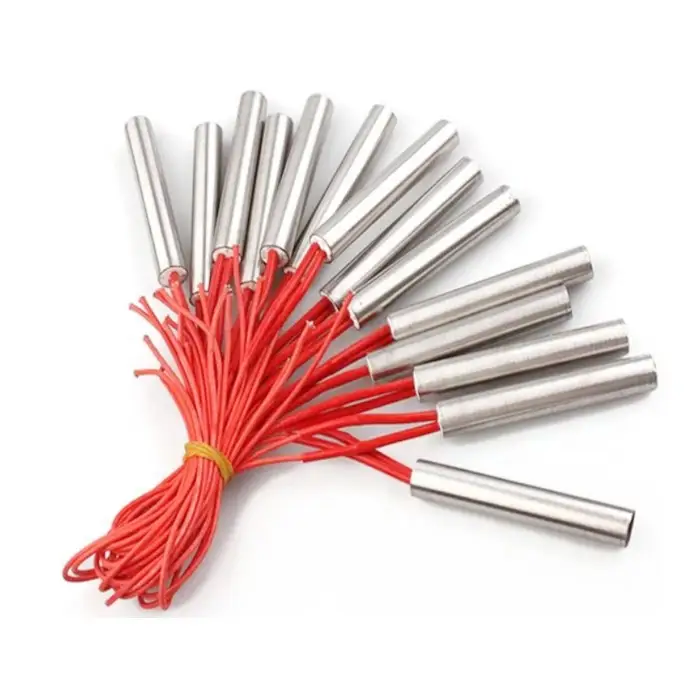
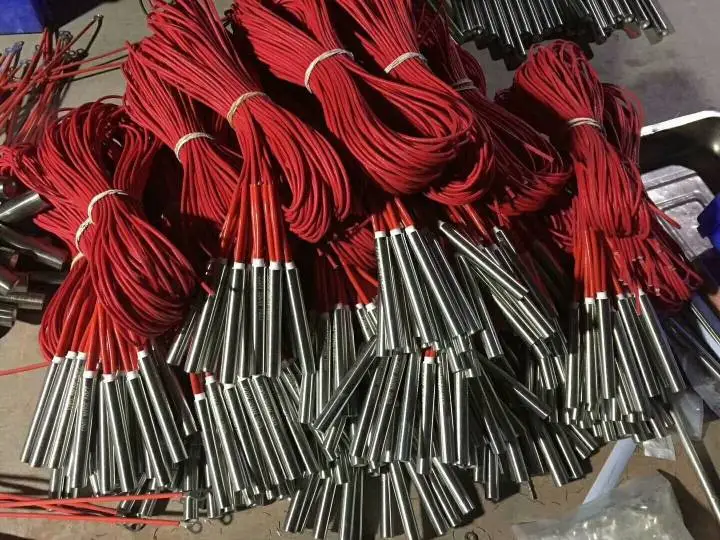
Product Advantages
1:High-Density Swaged Cartridge Heater
2:Low density cartridge heater are available
3:Various diameter from 3MM-30MM
4:Good Alloy tube sheath for high corrosion resistance
5:Imported resistance wire, ensure high density large wattge
6: Fasteners and flanges to meet a variety of installation requirements.
7:High temperature, wear-resistant, waterproof
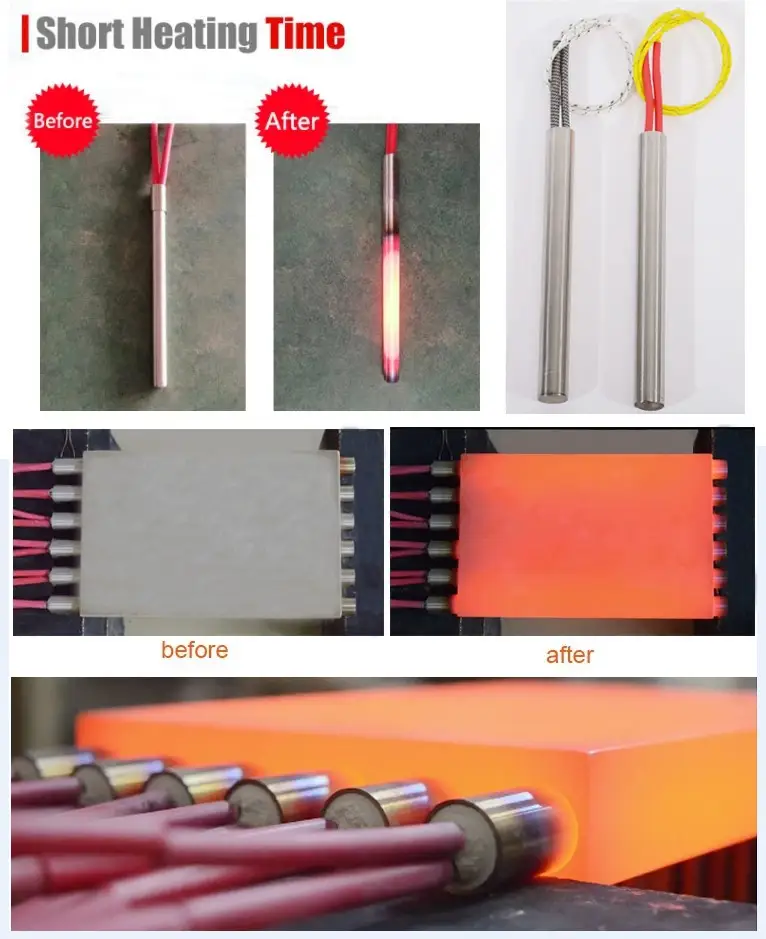
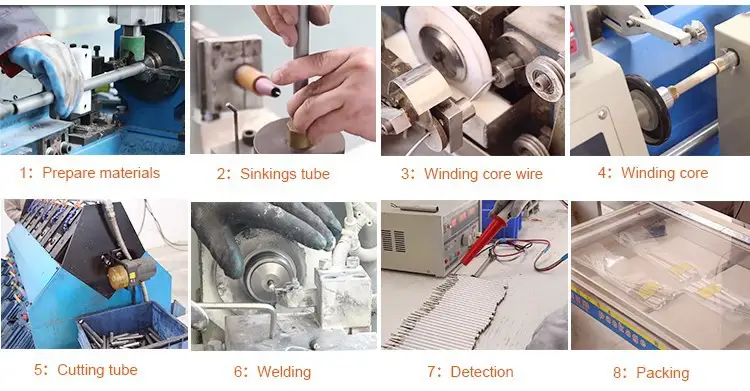
Cartridge heaters are a type of electric heating element that are commonly used in industrial settings to provide localized heating in machinery and equipment. Here are the basic steps involved in manufacturing cartridge heaters:
Core wire selection: The core wire is the heating element of the cartridge heater and is usually made of nickel-chromium or iron-chromium alloys. The wire is selected based on the required wattage and operating temperature of the cartridge heater.
Coil winding: The core wire is wound around a ceramic or metallic core to create the heating element. The number of turns and the diameter of the wire are determined based on the desired electrical resistance and watt density of the heater.
Core assembly: The heating element is inserted into a metal sheath, which is usually made of stainless steel or Incoloy. The ends of the core wire are welded or crimped to lead wires that will provide power to the heater.
Sealing and insulation: The ends of the metal sheath are sealed with ceramic or epoxy material to prevent moisture and contaminants from entering the heater. The entire assembly is then insulated with magnesium oxide powder to improve heat transfer and electrical insulation.
Finishing: The cartridge heater is cut to the required length and the lead wires are attached to terminal blocks or connectors. The heater may be coated with a protective layer to resist corrosion or abrasion.
Testing: The finished cartridge heater is tested to ensure that it meets the required specifications for electrical resistance, wattage, and insulation resistance.
Manufacturing cartridge heaters requires specialized equipment and expertise in electrical engineering and metalworking. It is important to follow safety procedures and quality control measures to ensure that the heaters are reliable and safe for use in industrial applications.
What is a Cartridge Heater and how does it work?
A cartridge heater is a tube-shaped, industrial heating element that can be inserted into drilled holes. Cartridge heaters provide localized and precise heating and are commonly used in the heating process industry. Typically, cartridge heaters are used to heat a metal block from the inside and can be custom manufactured to a specific watt density based on the requirements of the application.
Cartridge heaters are most frequently used for heating metal parts by insertion into drilled holes. For easy installation, the heaters are made slightly undersize relative to their nominal diameter.
How does a Cartridge Heater work?
A cartridge heater consists of resistance coil wound around a ceramic core that is surround by dielectric and encased in a metal sheath. Powered heat transferred through the coil to the sheath causes the sheath to heat up. This heat is then transferred to the inside metal part requiring heat.
To fit a cartridge heater in a low or medium temperature application (600°F or less), general purpose drills are usually adequate for drilling holes. Holes can be drilled .003” to .008” over the nominal size of the drill, resulting in fits of .009” to .014.” While this fit is slightly looser than would permit optimal heat transfer, it aids in the installation and removal of the cartridge heaters, especially those with long sheaths. At high watt densities, a close fit is much more important. The holes should be drilled and reamed rather than just drilled with a general purpose bit. With a tighter fit, the heater will run cooler and have a longer life expectancy.
What are the operating temperatures of a Cartridge Heater?
Cartridge heaters can operate at low, medium, and high watt densities. They are designed to withstand a working temperature of up to 1400°F. However, the optimal operating temperature will depend on the application for which you are using the cartridge heater.
It’s also important to note that there are multiple factors, such as the cartridge heater watt density, the tightness of the cartridge inside the hole, and the thermal conductivity of the material being heated, that can impact the actual temperature of an industrial heater and the monitored temperature of a material during the heating cycle. For high temperature applications, such as those above 1000°F, incoloy sheathes are recommended for maximum heat transfer and durability.
It is also important to consider the electrical termination of a cartridge in regard to the operating temperature. When cartridge heaters are used at relatively high temperatures, the electric terminals should either be different than the common high temperature lead wires or the cartridge should be designed in a manner that the temperature around the lead wires is maintained at a lower temperature than the temperature limit of the lead wire.
What are Cartridge Heaters used for?
Cartridge heaters are most frequently used for heating dies, platens, molds, and other metal parts by insertion into drilled holes. They can also be used in liquid immersion applications.
Below are some examples of specific applications:
Heating gases and liquids
Hot runner molds
Hot stamping
Laminating presses
Medical equipment
Semi-conductor
Plastic molding
Scientific equipment
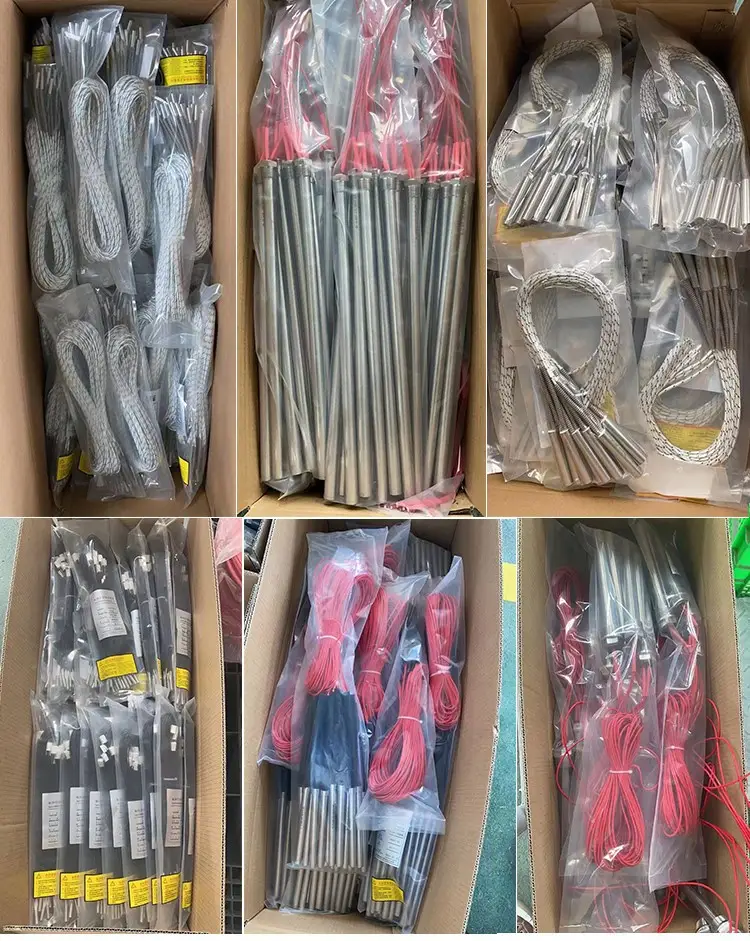
Package
Company Profilm

Hot Tags: 12v heater resistance, China, manufacturers, suppliers, factory, wholesale, customized, cheap, in stock, free sample, 230v electric cartridge heater, 3d printer cartridge heater heating element, Aluminium Spiral Stainless Steel Finned Tube, industrial electric cartridge heater heater, 230v electric cartridge heater supplier, 12v 40w cartridge heater for 3d printer
Specifications and availability vary by configuration. Confirm dimensions, materials and electrical or measurement ratings in your quotation.
ENGINEER-REVIEWED QUOTATION